

Should You Leave an Inheritance in Trust for Adult Children?
Your child is a doctor, lawyer, founder, or other successful professional. Leaving their inheritance outright often feels like the respectful choice, but their success brings risks that direct ownership does not protect against. Here’s when an inheritance trust for adult children can protect what you built without treating a capable adult like a child. Read more...

You Have Life Insurance. Here’s What Your Family Actually Needs.
You bought life insurance because you wanted the people you love to be protected. But the policy you chose years ago may no longer match the family, finances, or estate plan you have today. Here’s what a life insurance beneficiary review can reveal before your family needs the money. Read more...

Your Trust Could Reach the 37% Tax Bracket at Just $16,000
You built your IRA to give your family security and opportunity. But if it passes to a trust, SECURE Act rules can force withdrawals faster while retained income reaches the 37% federal bracket at just $16,000 in 2026. Here's what to review before one form changes what your wealth can do.

You Made a Will. Here’s What It Can’t Do.
You did it.
Maybe Make-A-Will Month finally moved it to the top of your list. Maybe you've been meaning to get this done for years and this was the month it finally happened. Either way, you sat down, signed the documents, and walked out with something most families never get around to.
That matters. I mean it.
But here's what I tell every client who comes to me after making a will somewhere else: most families think the job is done. They sign the documents, file them away, and assume they're covered. Then something happens, and they find out how much the will didn't do.
If you made a will, this is your checklist for what comes next.

The Cosby Show Made Him Famous. His Estate Plan Failed His Family. Here’s What I Would Have Done.
The Cosby Show star Malcolm-Jamal Warner left $1.2M in unfulfilled premarital promises. Here’s what a Personal Family Lawyer® firm would have done differently.

Make-A-Will Month Is Here. But a Will Isn't a Plan.
A will is an important first step, but it may not protect your family from probate, incapacity, or gaps in guardianship. Learn what a complete plan requires.

Friends Don't Let Friends Go Without an Estate Plan
You've heard the phrase: "Friends don't let friends drive drunk." The same logic applies to estate planning. According to Caring.com, only 24 percent of Americans have a will. For some of the people you love most, you may be the only person in their life who will ever bring this up. Here's how to do it without making it weird, and what to tell them about what real planning looks like.
August is National Make a Will Month, which means this is exactly the right time.

Trump Accounts: What Every Parent of a Baby Born 2025–2028 Needs to Know
The federal government is depositing $1,000 into savings accounts for every baby born between January 1, 2025 and December 31, 2028. The account is called a Trump Account, contributions opened July 4, 2026, and most families have not yet taken the step to claim it. Here is what it is, how to open one, and what it means for your family's plan.

When Your Spouse Won't Get on Board with Estate Planning: What to Do Now
You've brought it up before. Maybe it came up after watching a friend go through something hard, a probate process that dragged on for years, or a family left scrambling without the right documents in place. Maybe a health scare prompted the conversation, or a birthday that snuck up faster than expected. Whatever brought it to mind, you've tried to talk to your spouse about getting a plan in place.
And it went nowhere.
Not because they were openly against it. Maybe they changed the subject. Maybe they agreed and then nothing happened. Maybe they said, "We don't need to worry about that yet," and somehow that became the final word on the matter. Whatever the reason, nothing is in place, and you feel stuck.

What Happens to Debt When You Die: What Families Must Know
Most families believe they will inherit their loved one’s debt. Most debt collectors count on that fear. Your debt does not automatically transfer to your heirs, but it shapes how much they receive and what the estate must pay before they get anything. Here is exactly what happens and what your family needs to know before the collectors call. Read more…
The New Tax Law and Your Family's Trust: What to Know Now
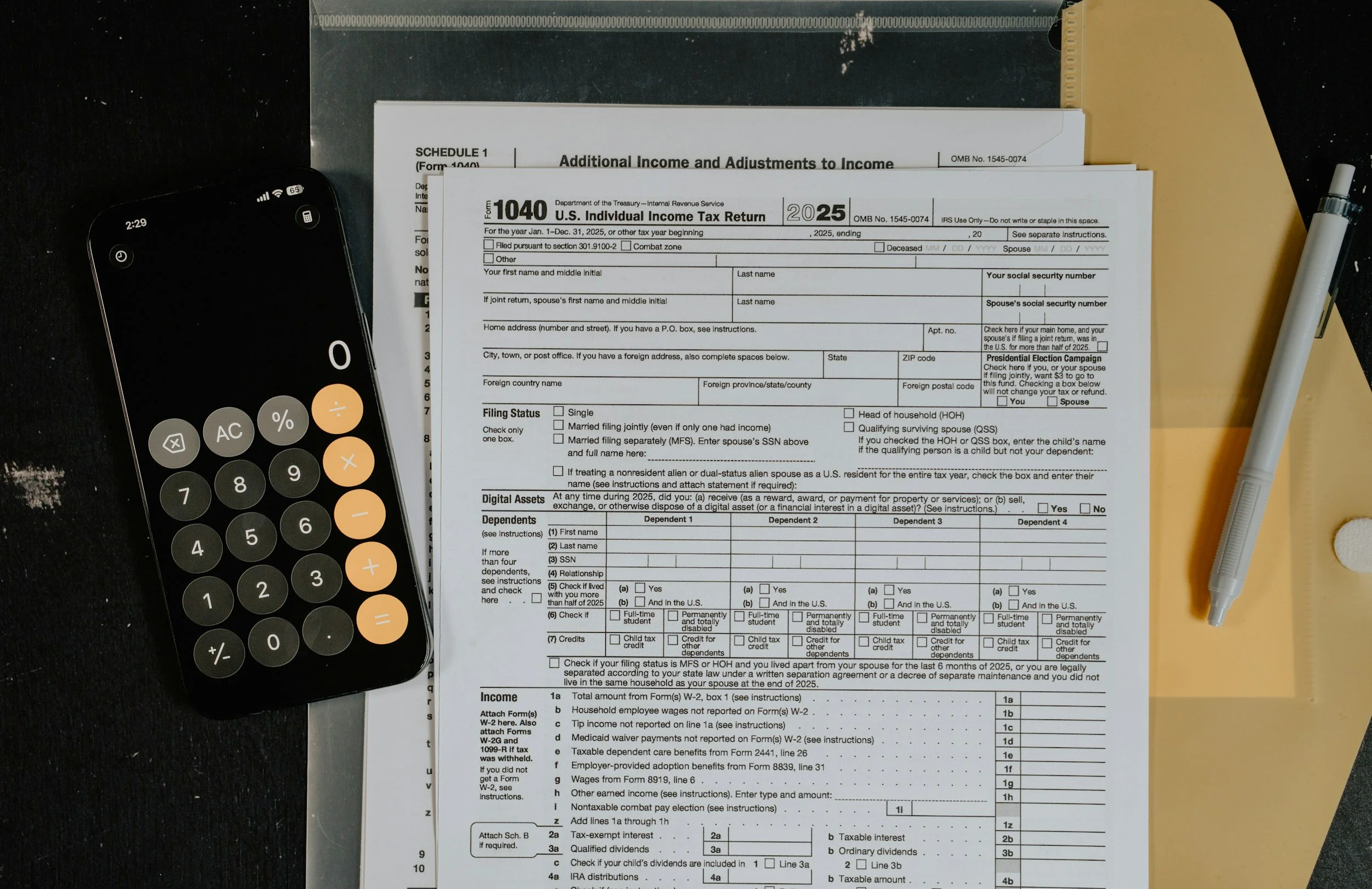
The One Big Beautiful Bill raised the estate tax exemption to $15 million per person. That provision made headlines everywhere. A second one didn't: a deduction limitation buried in a Congressional footnote that tax lawyers say may create double taxation inside family trusts, including special needs trusts with as little as $400,000 in assets. Here is what families with trusts need to know right now. Read more…

Digital Estate Planning: Why Passwords Aren't Enough
Most online accounts now require two steps to log in. The first step is the password. The second step is a verification code sent to a trusted device or phone number at the moment someone tries to access the account.
This is called two-factor authentication, and it has become the standard security requirement for financial accounts, investment platforms, email providers, and cloud storage. It is one of the most effective protections against fraud and identity theft.
It is also one of the most common reasons families cannot access accounts after a death. The person trying to log in has the password. But the verification code goes to a phone that is locked, a number that no longer works, or an email address that no longer exists.

Divorce Doesn't Update Your Estate Plan: Here's What Does
If you are a divorced father, you already know something that most married fathers don't: showing up for your kids takes more deliberate effort than it looks like from the outside.
You have worked on the relationship you have with them. You know which weeks are yours and how to make them count. You have figured out the handoffs, the schedules, and the way to stay present even when circumstances make it complicated.
What I find almost universally, when a divorced father walks into my office, is that the one thing he has not done is update his estate plan to match the life he is actually living. The plan from before the divorce, or the one hastily put together during it, is almost certainly not the plan his children actually need.

The Father the Law Doesn't See: What Stepfathers and Father Figures Need to Know
If you are a stepfather, you know the difference between the legal definition of father and the real one.
The real one shows up. He learns the allergies, the fears, and the names of the friends. He drives to the practices and sits through the recitals and knows which child needs quiet when they're upset and which one needs noise. He considers these children his family, and they consider him theirs.
The legal definition is something else entirely. Under the law, a stepparent has no automatic legal relationship to a stepchild. Not unless that child has been formally adopted. No matter how many years you've shown up. No matter what you call each other. The law has no record of what you've built.
That gap, between the family you live in and the family the law recognizes, is the one a plan has to close.

The Question Every Father Thinks He's Answered (But Hasn't)
There are two kinds of fathers.
The first kind coaches the games, makes it to the school plays, stays up late helping with the projects, and loves his family in every visible way. He thinks about what would happen if something happened to him: maybe during a long drive home, maybe after a close call, maybe in a quiet moment watching his kids sleep. He thinks about it and then moves on, because the day-to-day of being a father takes up almost everything he has.
Father's Day tends to celebrate the first kind. The presence, the showing up, the love that fills a room.
The second kind does all of that and also answers the question.
The fathers who've truly done right by their families, the ones who've given their children something that outlasts them, are the ones who made a plan. Not because they expected the worst, but because they understood that loving someone means protecting them even when you can't be there.
If you haven't answered the question yet, this is where to start.

Who Would Raise Your Kids If You Couldn't? (What You Don't Know About the First 72 Hours)
I work with parents on this exact question all the time, and especially this time of year, sitting right between Mother's Day and Father's Day, the love you have for your children tends to be at the forefront of your mind. But there's a question I find most parents haven't actually answered yet, even the ones who think they have.
When I sit down with parents, I find most have thought about who would take care of their children if something happened to them, maybe during a quiet moment on a long drive, or in a conversation with a partner that reached an agreement in their heads but never quite made it onto paper.

No One Warned Her About the Widow Penalty. Her First Tax Return Did.
When a spouse dies, most surviving partners expect grief. They do not expect a tax bill. The "widow penalty" is a real and largely unrecognized consequence of losing a spouse that can cost a surviving partner thousands of dollars more every year in taxes and Medicare premiums, at the worst possible moment in their life. Here is what it is, who it affects, and what you can do now, while there is still time to plan.

The Document That Fails When You Need It Most
You signed the Power of Attorney (POA). You thought your family was protected. But when a parent or spouse loses capacity, that document you trusted may get rejected at the very bank where you need it most, and your family may not have time to fight it. As your Personal Family Lawyer®, this is exactly the kind of gap I make it my job to close before you ever need to find out the hard way.

He Sold His Company for $1.2 Billion. He Died Without an Estate Plan.
Tony Hsieh sold Zappos to Amazon for $1.2 billion and built one of the most admired companies in America. When he died at 46 without a will or a trust, his family was left to sort out an estate worth hundreds of millions of dollars. Publicly, slowly, and painfully. What happened next is a lesson everyone who has something to protect should read.

Her Husband Died Without a Will. Then ICE Came to the Door.
You fall in love later in life. You marry. You start over.
Then your spouse dies suddenly.
Before you have time to grieve, the family starts fighting, the locks get changed, the mail stops arriving, and the basic stability of your life begins to slip away. Without the right legal planning, that kind of loss can trigger a chain reaction that is brutally hard to stop.
That is one of the clearest estate planning lessons in the reported story of Marie-Thérèse Ross-Mahé, an 86-year-old French widow who moved to Alabama to marry her first love. After her husband died without a will, she became trapped in a dispute over his estate and, days later, according to public reporting, was arrested by ICE and detained for 16 days.